CovaSyn

Insights

Latest analyses and perspectives on AI in chemistry, pharma, and biotech.

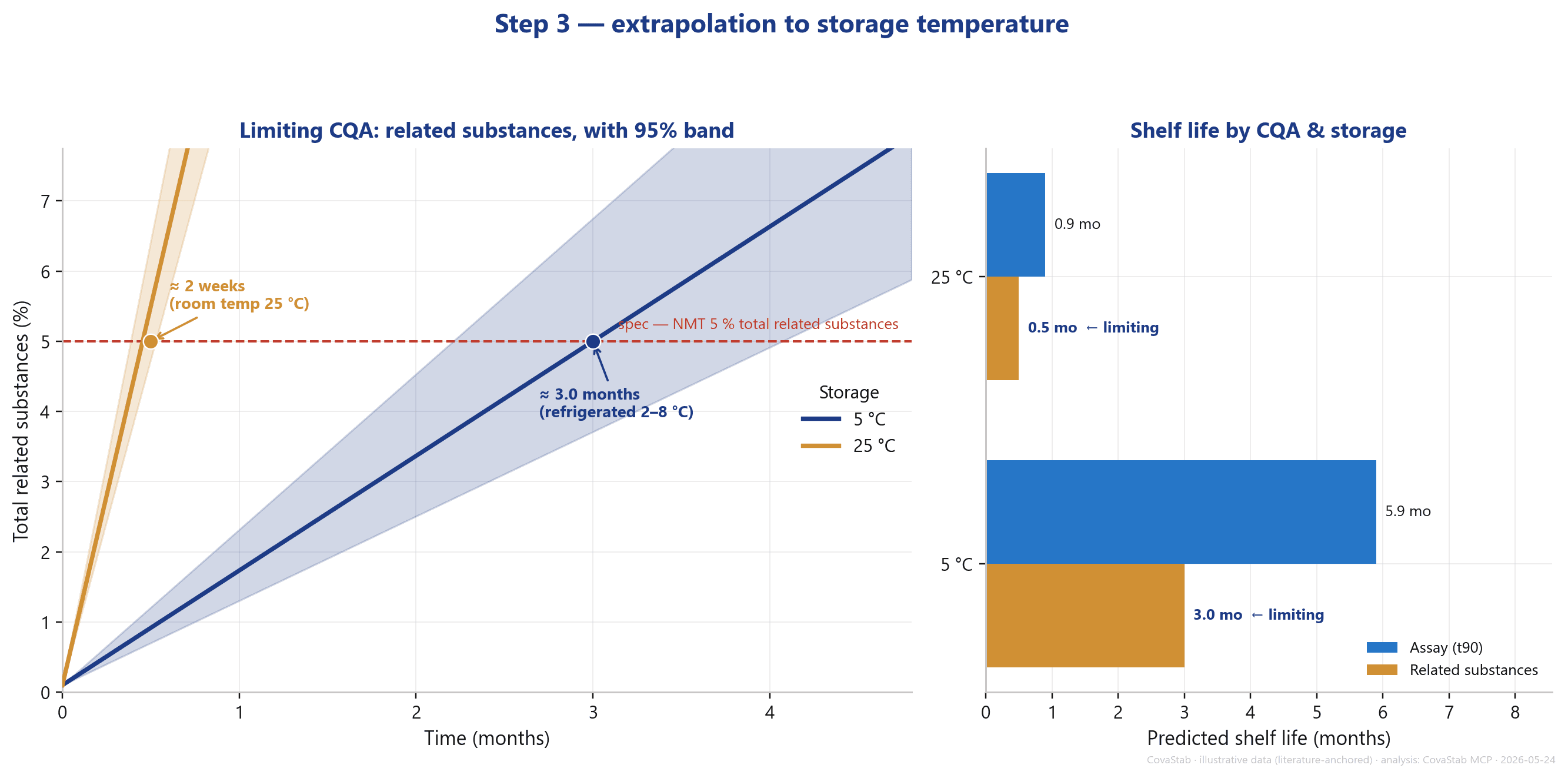
Shelf-life prediction with Arrhenius: from weeks of data to a shelf-life estimate in minutes
Use Case9 min read

Shelf-life prediction with Arrhenius: from weeks of data to a shelf-life estimate in minutes

From a few weeks of accelerated stability data to a shelf-life estimate in minutes: on an amoxicillin example. Why the limiting parameter is not assay. And why the tool itself tells you when not to rely on extrapolation alone.

May 24, 2026
Can AI predict toxicity? The CovaTox benchmark: measured honestly
Benchmark10 min read

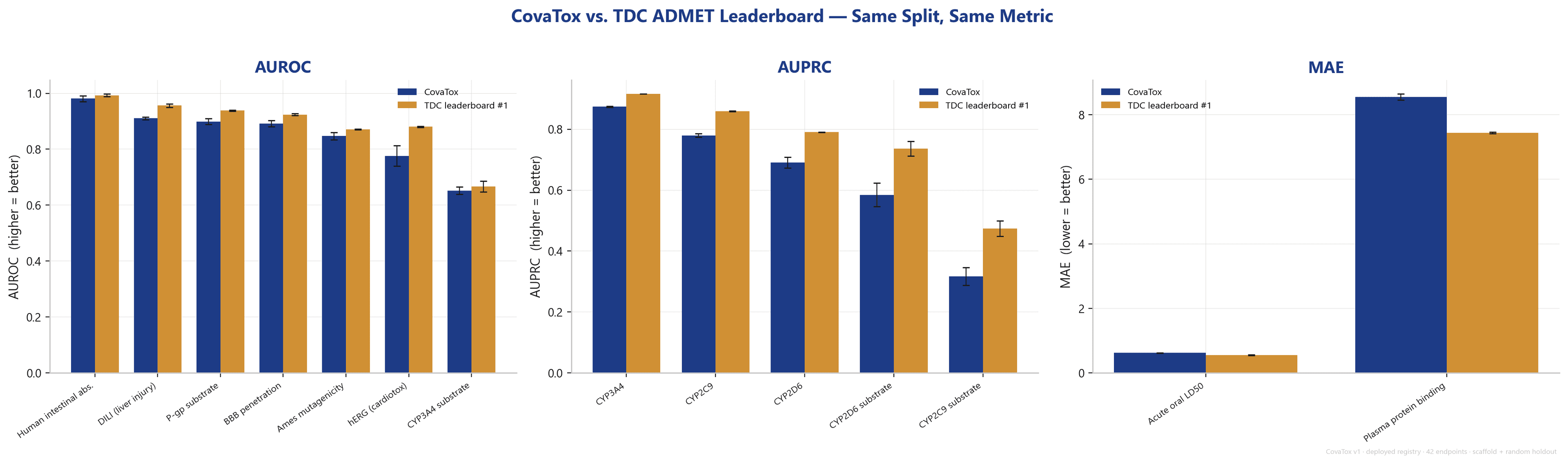
Can AI predict toxicity? The CovaTox benchmark: measured honestly

CovaTox covers 42 ADMET / toxicity endpoints in one suite. In a true same-split, same-metric head-to-head against the TDC leaderboard, we sit a few points below the best dataset-specialized models on the AUROC endpoints: with one pipeline across everything. We name the weak spots openly.

May 24, 2026

Agentic AI across the drug-development lifecycle, from discovery to scale-up
Position11 min read

Agentic AI across the drug-development lifecycle, from discovery to scale-up

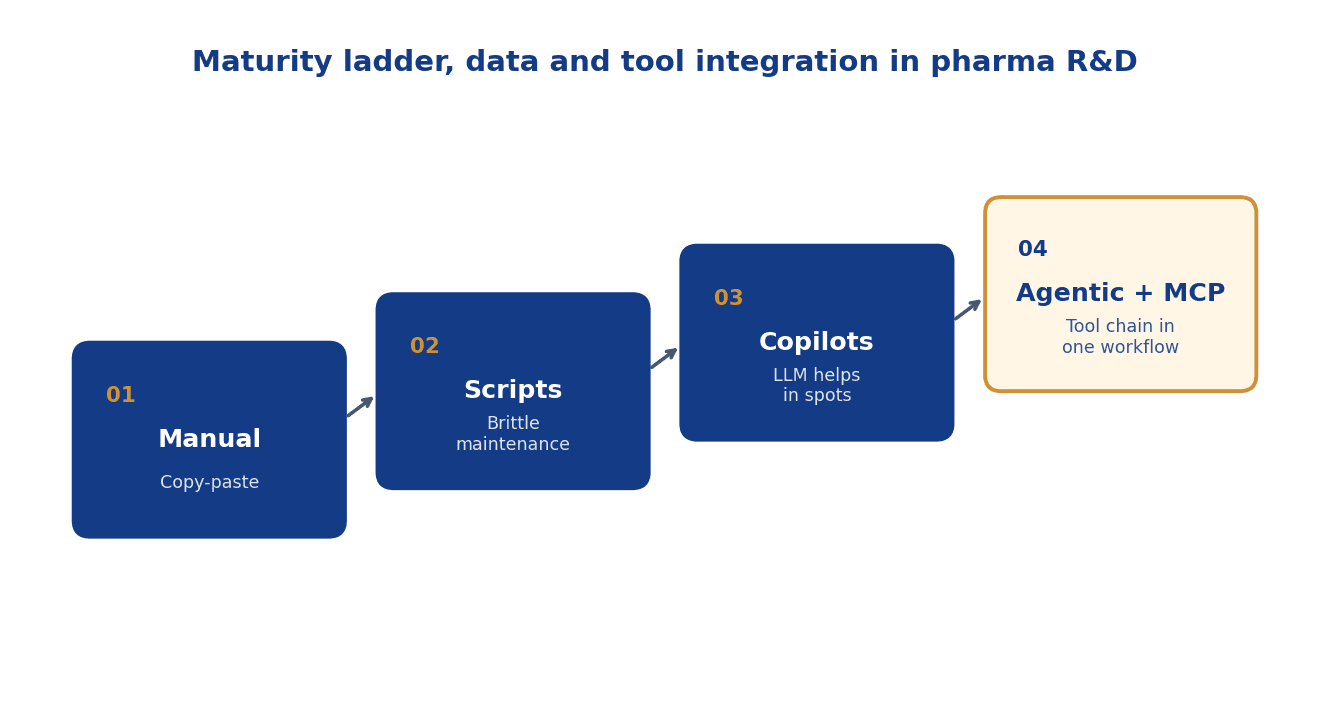
Agentic AI over MCP connects fragmented R&D data into one system. Example pipelines from discovery through CMC to manufacturing, and why the open tool layer decides the actual competitive edge.

May 24, 2026

Justify the worst-case marker of a shared facility in hours: not weeks
Use Case9 min read

Justify the worst-case marker of a shared facility in hours: not weeks

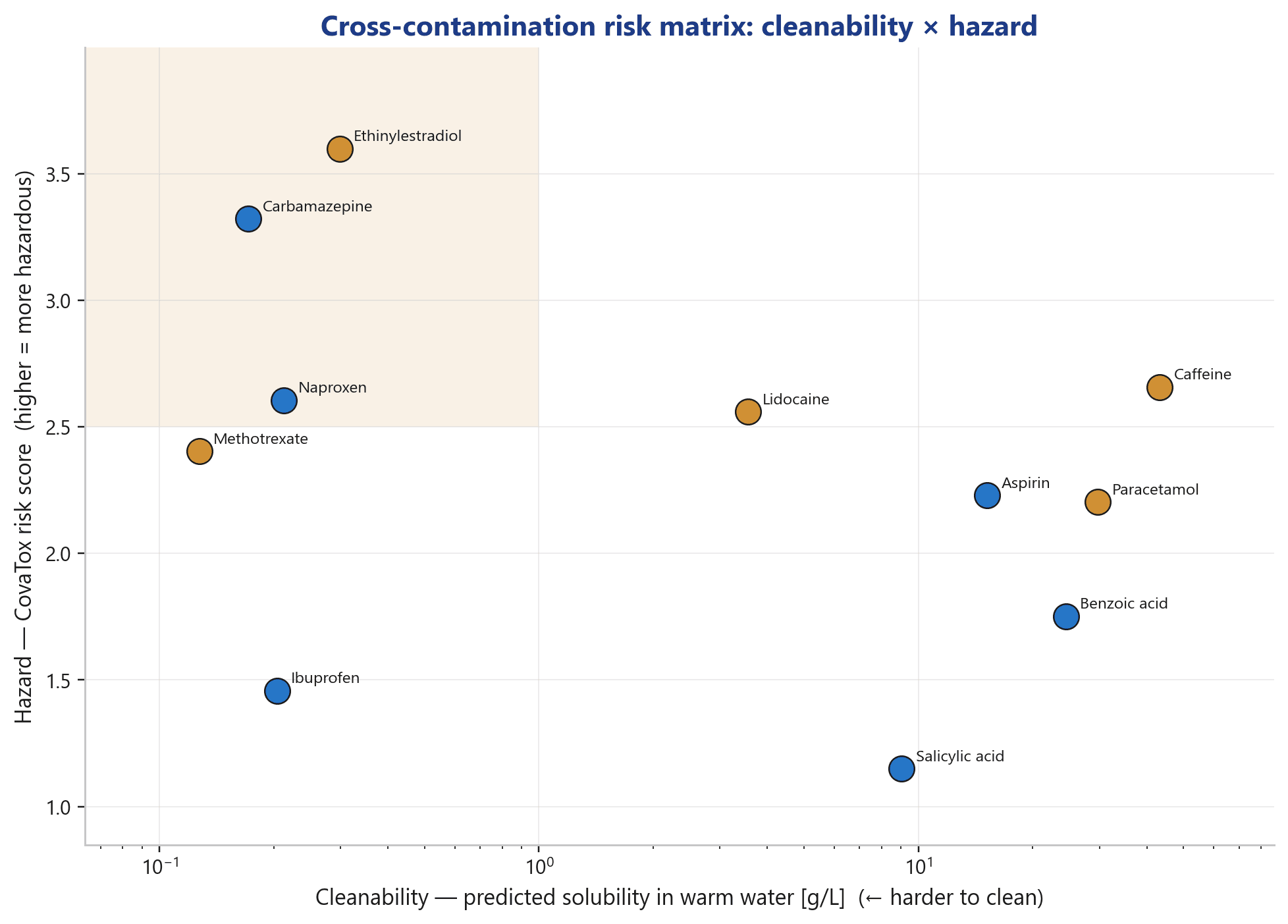
Cross-contamination risk assessment rethought: CovaSolv cleanability × CovaTox hazard surfaces the worst-case marker of a multi-product facility in hours instead of weeks. Why it is the combination, not a single axis: and why carbamazepine wins on the example roster, ahead of methotrexate and ethinylestradiol.

May 24, 2026

Designing carbamazepine crystallization, three steps with CovaSolv
Use Case7 min read

Designing carbamazepine crystallization, three steps with CovaSolv

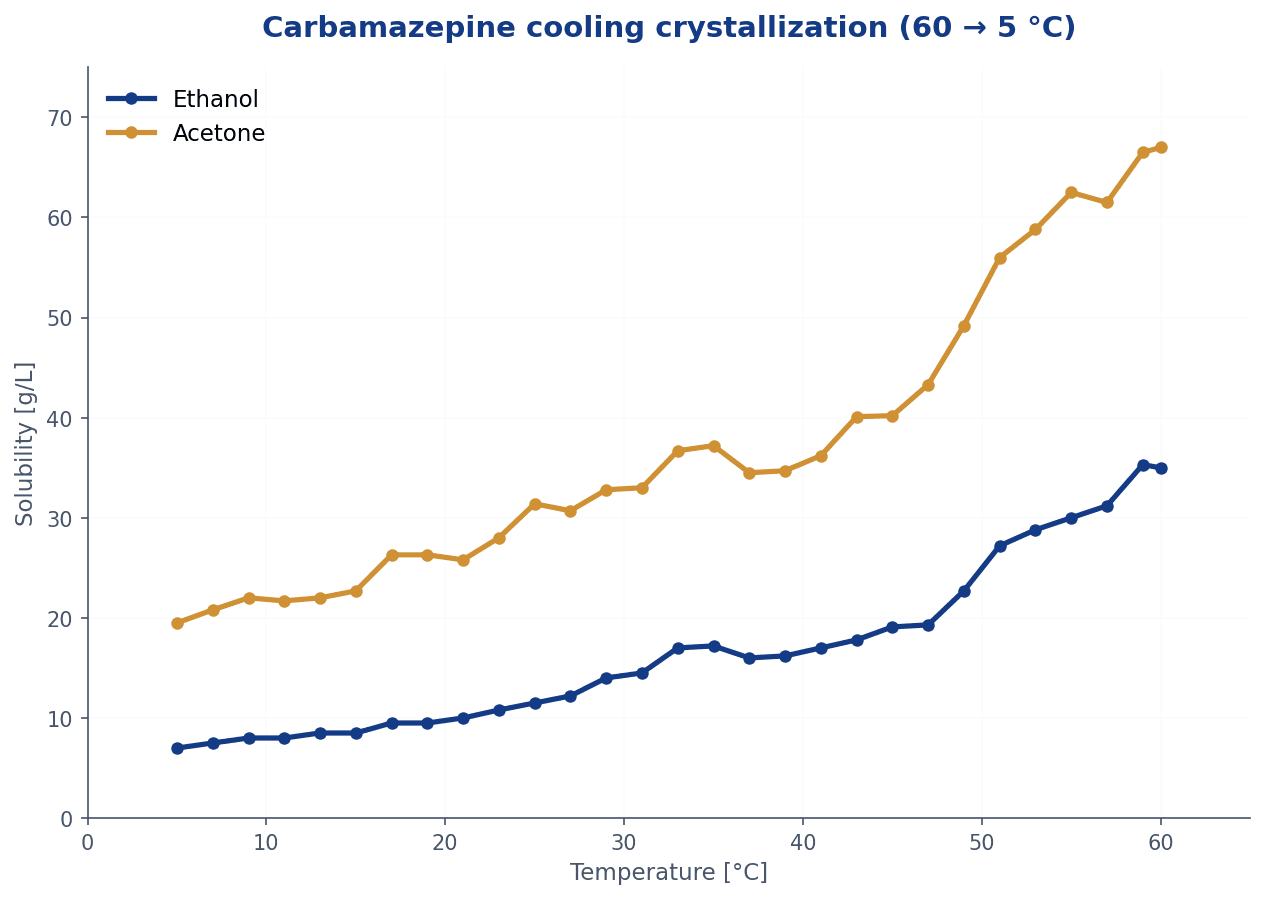
Solvent screening, cooling curve, anti-solvent. Why acetone dissolves more at both temperatures but ethanol gives the higher yield, and how water as an anti-solvent crashes solubility by a factor of 220 without cooling a single degree.

May 23, 2026

Gemini 3.5 Flash on chemistry: from 14 % to 76 %, why the cheapest model makes the biggest jump
Benchmark8 min read

Gemini 3.5 Flash on chemistry: from 14 % to 76 %, why the cheapest model makes the biggest jump

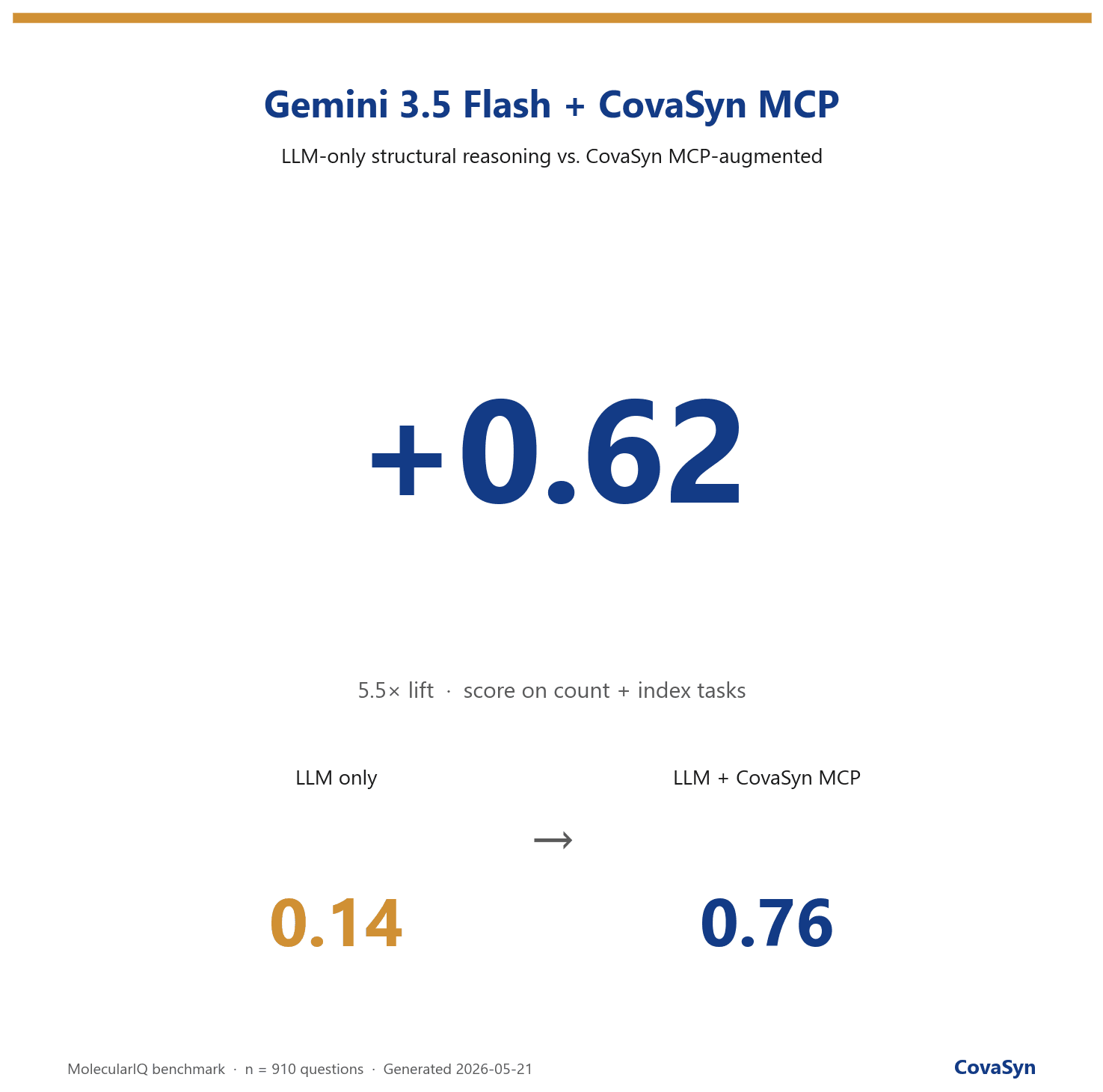
Gemini 3.5 Flash reaches just 14 % on molecular reasoning without tools. Attach CovaSyn MCP and the same model jumps to 76 %, a 5.5× lift, the largest of all tested frontier models. Why the cheapest model benefits most, what it costs, and where the lift is not yet perfect.

May 22, 2026

Context stuffing vs. tool calling: why many AI projects fail at the data architecture
Position9 min read

Context stuffing vs. tool calling: why many AI projects fail at the data architecture

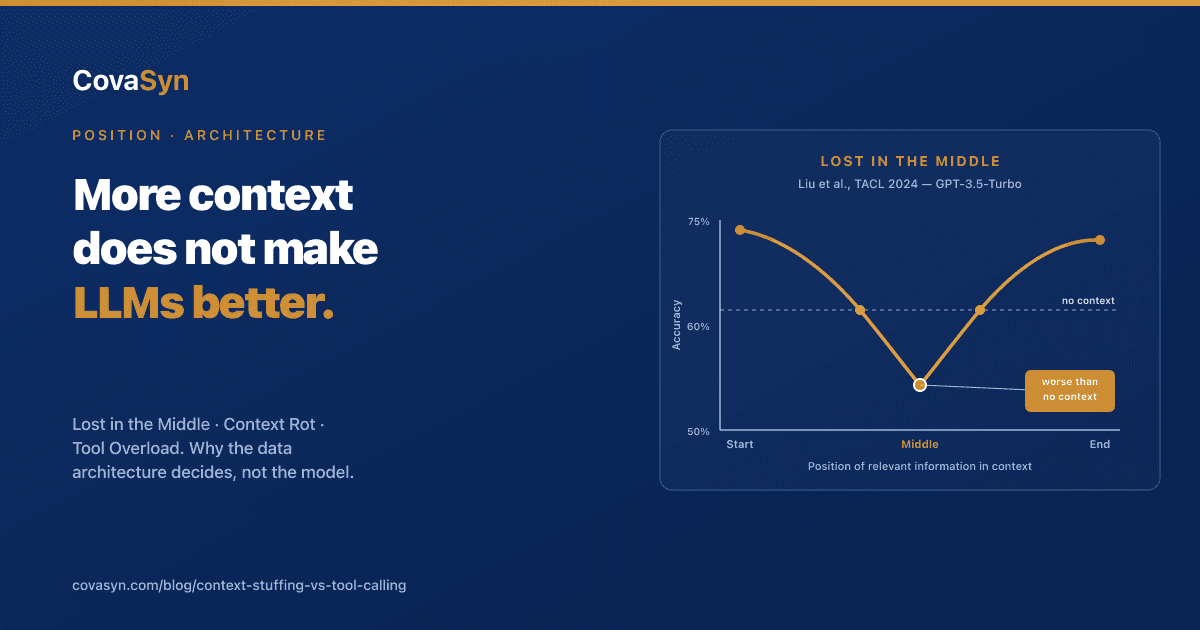
More context does not make LLMs more reliable, the research shows the opposite. Three documented failure modes (lost in the middle, context rot, tool overload), why data architecture decides the outcome, and when tool calling is the more reliable choice.

May 22, 2026

AI Chemistry with Gemini, CovaSyn MCP Tool Calls for Drug Discovery and Biologics
Agent Setup10 min read

AI Chemistry with Gemini, CovaSyn MCP Tool Calls for Drug Discovery and Biologics

Gemini's tool-calling reliability got pharma-usable in 2026. This guide shows how to attach CovaSyn's 18 families of deterministic chemistry tools to a Gemini agent for drug discovery, biologics, and process development, via the Gemini CLI and the Gemini API on Vertex AI. With the ICLR 2026 benchmark numbers and a worked tool call.

May 22, 2026

Chemical MCP Tools in ChatGPT, Drug Discovery, Biologics and Regulatory Workflows
Agent Setup10 min read

Chemical MCP Tools in ChatGPT, Drug Discovery, Biologics and Regulatory Workflows

The ChatGPT App Directory and OpenAI's MCP support turned ChatGPT into a viable pharma-R&D agent in 2026. This is the practical guide for attaching CovaSyn's 18 families of chemical tools to a ChatGPT workflow, via the App Directory, Custom GPTs, the OpenAI API, and the new Apps SDK. With the ICLR 2026 benchmark numbers and a worked tool call.

May 22, 2026

CovaSolv benchmarked: predicting solubility at R² 0.92, and why the honest number is the more important one
Benchmark10 min read

CovaSolv benchmarked: predicting solubility at R² 0.92, and why the honest number is the more important one

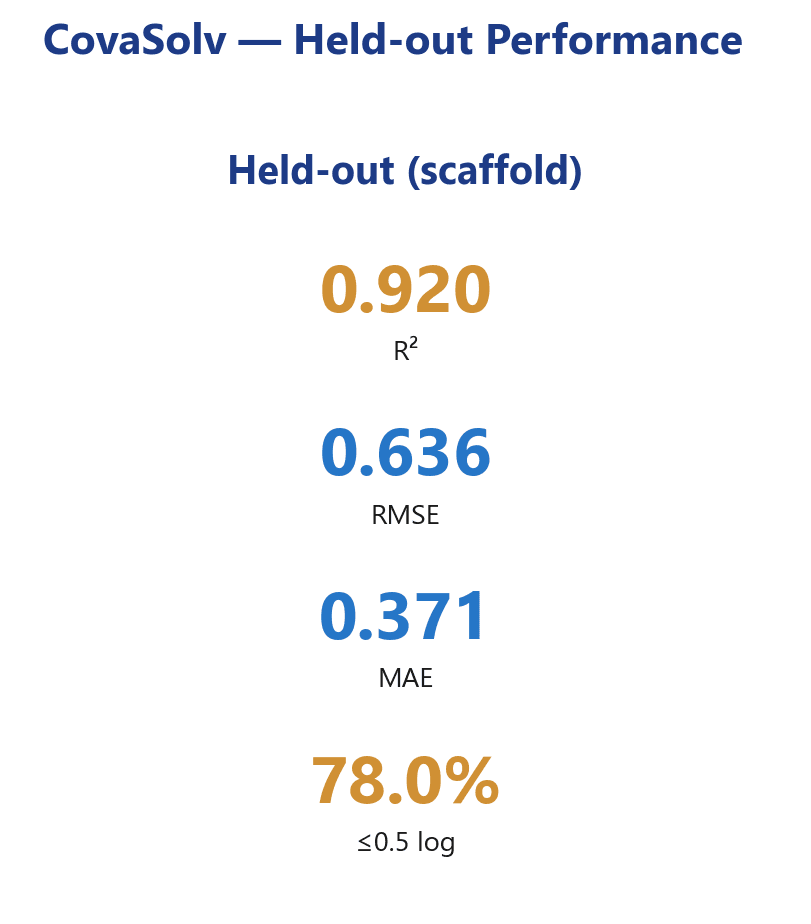
CovaSolv predicts logS at R² 0.92 and RMSE 0.64, on 5,315 unseen molecular scaffolds. 78 % of predictions sit within 0.5 log units of the measured value. How close that is to the physical noise floor, honestly explained.

May 22, 2026

Why LLMs fail at chemistry, and what the tokenizer has to do with it
Explainer6 min read

Why LLMs fail at chemistry, and what the tokenizer has to do with it

LLMs fail at counting rings. The reason is not missing chemistry knowledge but the tokenizer: SMILES strings shatter into disconnected fragments, and the molecular graph is lost. What the research shows, and how validated tools solve the problem.

May 22, 2026

Chemistry MCP for Cursor, DeepSeek and Qwen, Open-Weights AI for Drug Discovery
Agent Setup11 min read

Chemistry MCP for Cursor, DeepSeek and Qwen, Open-Weights AI for Drug Discovery

Not every pharma team can run on Claude or GPT, IT security, data residency, or budget force open-weight stacks. This guide shows how to attach CovaSyn's 18 families of chemical MCP tools to Cursor, DeepSeek, Qwen and any LiteLLM-routed open-weight model. With concrete configs, the cost math, and where open-weight breaks down for chemistry.

May 22, 2026

CovaSyn MCP

Run scientific tools right inside your AI agent.

18 deterministic tool families, one MCP server.

Try CovaSyn MCP
Insights - 5 | CovaSyn